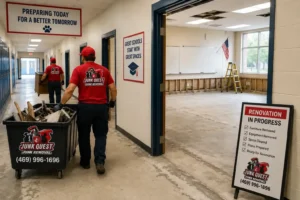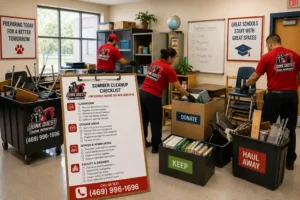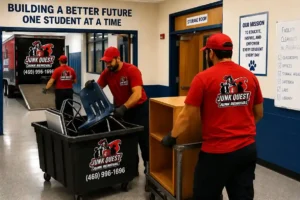
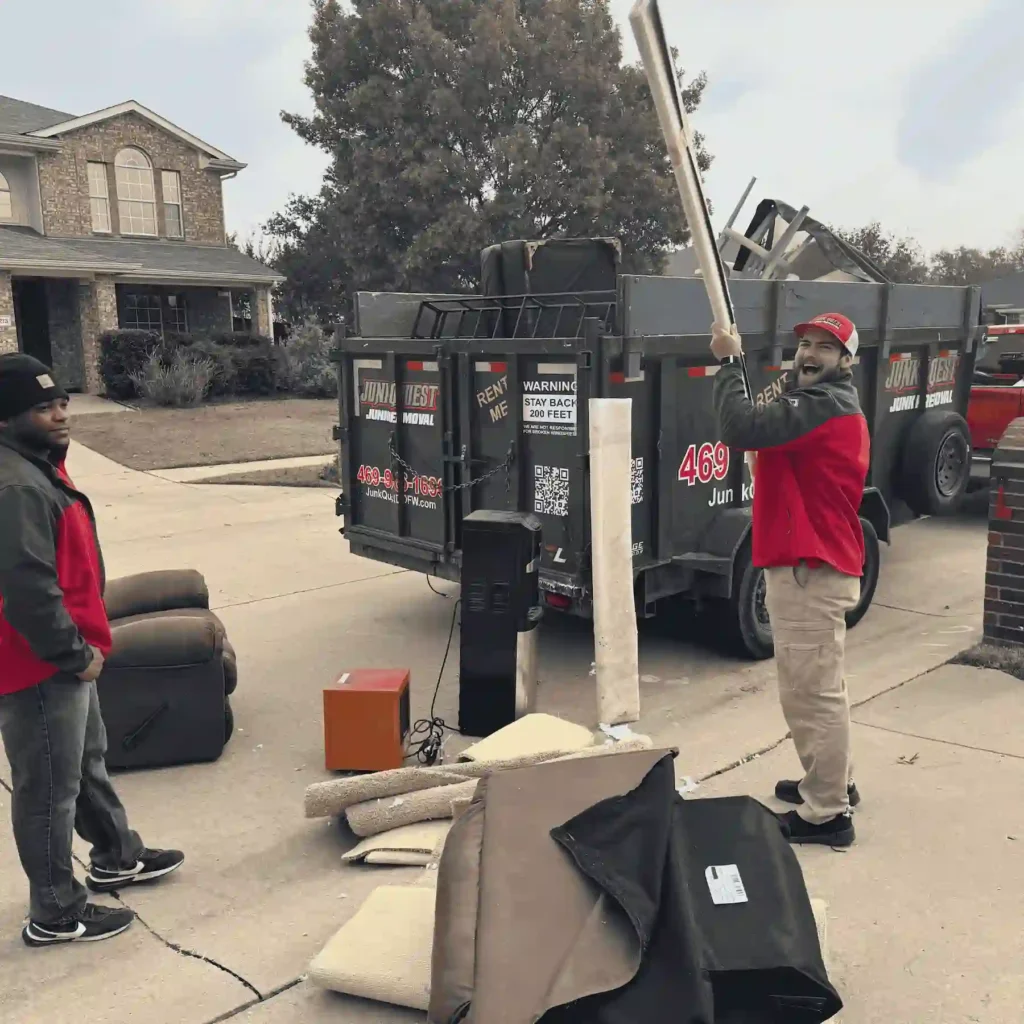
Storm damage cleanup in McKinney, TX refers to the removal of debris, fallen tree limbs, damaged outdoor structures, and scattered materials left behind after a severe weather event. Junk Quest handles the heavy lifting, hauling, and responsible disposal so that homeowners and property managers can restore their property quickly without doing the physical labor themselves. Junk Quest provides same-day and emergency storm damage cleanup across McKinney and the wider North Dallas area, seven days a week.
Key Takeaways
- Storm damage cleanup in McKinney covers fallen tree limbs, damaged fencing, roof debris, scattered yard waste, damaged outdoor structures, and construction materials from storm repairs.
- Debris left after a storm creates safety hazards, pest risks, and potential liability for homeowners; prompt removal is the responsible course of action.
- North Texas and Collin County experience 50 or more severe thunderstorm warnings per year, making storm debris removal a recurring need for McKinney homeowners.
- Flood-damaged electronics and certain construction materials require certified disposal under Texas Commission on Environmental Quality (TCEQ) guidelines and cannot go into standard trash.
- Junk Quest offers emergency same-day storm cleanup from 6:00 A.M. to 12:00 A.M., seven days a week, across McKinney, Frisco, Plano, Allen, Wylie, Prosper, and surrounding North Dallas communities.
- All collected storm debris is sorted for green waste composting, recycling, or responsible disposal, not sent directly to landfill.
Why Does Storm Debris Need to Be Removed Quickly After a Weather Event?
Storm debris left on a property for more than a few days creates compounding problems. Fallen branches and scattered materials become trip and fall hazards, standing water trapped under debris attracts mosquitoes and pests, and damaged fencing or structures left uncleared can create liability issues for homeowners and landlords.
According to the National Weather Service (NWS), North Texas sits within one of the most active severe weather corridors in the United States, with McKinney and the surrounding Collin County communities experiencing an average of 50 or more severe thunderstorm warnings per year. The volume and frequency of storm events in this region means that storm damage cleanup is not an occasional need but a recurring one for property owners throughout the area.
Beyond safety and liability, prompt debris removal is often required before insurance inspectors can complete a property assessment. Having a professional team clear the site quickly creates a cleaner record of the damage and speeds up the claims process.
What Types of Storm Debris Does Junk Quest Remove in McKinney?
Junk Quest removes all categories of residential and commercial storm debris in McKinney and surrounding North Dallas communities. The service is not limited to fallen branches and covers the full range of materials left behind after a storm event.
Fallen tree limbs and branches: Large and small tree debris from broken canopies, snapped trunks, and uprooted shrubs. Junk Quest hauls the debris away but does not perform active tree surgery or stump grinding.
Damaged fencing and wooden structures: Storm-damaged wood fencing, pergolas, patio wood and deck materials, and garden structures that have been knocked down or broken apart.
Roof and siding debris: Shingles, gutters, insulation, and siding panels that have been blown off during high-wind events.
Scattered yard waste and lawn debris: Leaves, mulch piles, overturned planters, and general yard clutter redistributed by wind or flood water. Junk Quest’s yard waste removal service handles large-volume organic material haul-away.
Damaged outdoor furniture and structures: Broken patio sets, trampolines, playsets, and portable sheds that have been damaged beyond use in a storm.
Construction and renovation debris from storm repairs: As homeowners begin repair work following a storm, construction debris removal covers the tear-out materials generated during the remediation process.
How Does Storm Damage Cleanup in McKinney Work?
Storm damage cleanup by Junk Quest follows a straightforward same-day or next-day process designed to minimize disruption to the homeowner or property manager.
First, a Junk Quest crew arrives on-site and conducts a walkthrough of the affected areas to assess the volume and type of debris. An upfront flat-rate price is provided before any work begins, with no obligation to proceed. Once the price is agreed, the crew loads all debris onto the truck, clears the affected areas, and leaves the property clean. There is no requirement for the homeowner to bag, bundle, or stage debris at the curb before the team arrives.
All collected storm debris is sorted at the disposal stage. Green waste such as branches and organic material is directed to composting or green waste facilities where possible. Damaged wood structures and fencing are separated for appropriate disposal. Materials that can be recycled are handled in compliance with Texas Commission on Environmental Quality (TCEQ) standards.
To schedule storm damage cleanup in McKinney, call Junk Quest at (469) 996-1696 or get your free online quote. Same-day availability applies across McKinney, Frisco, Plano, Allen, Richardson, Wylie, Prosper, Celina, and surrounding areas.
How Does Professional Storm Cleanup Compare to Other Removal Options?
After a storm, homeowners in McKinney typically consider several options before deciding how to handle debris removal. The table below compares the most common approaches on the factors that matter most after a weather event.
| Method | Speed | Physical Effort | Coverage | Best For |
| Professional junk removal | Same-day to 24 hrs | Low crew does all work | All debris types, all areas of property | Large volume, mixed debris, fast turnaround |
| Municipal bulk pickup | Scheduled days only | Medium items must be curbside | Loose debris only, size limits apply | Small quantities of bagged or loose material |
| Tree service company | 1-5 days depending on demand | Low | Tree-specific only | Active tree work, stump grinding |
| DIY haul to landfill | Same day | Very high load, drive, unload | Any debris you can transport | Small loads, physically capable owners |
| Dumpster rental | 1-3 day delivery window | High load it yourself | Any debris that fits in container | Extended cleanup over multiple days |
What Storm Debris Should Not Be Left for Standard Trash Pickup?
Not all storm debris can be placed in standard residential trash or recycling bins for pickup. McKinney residents should be aware of these limits before attempting to dispose of storm materials through routine collection.
The City of McKinney’s standard bulk waste service accepts bagged yard waste and bundled brush with restrictions on size and weight per item. It does not accept large tree trunks, construction materials, roofing debris, or hazardous materials such as chemicals, treated lumber with preservatives, or electronics damaged by flooding.
Electronic equipment and appliances damaged by flood water or storm surge are classified under e-waste guidelines by the Texas Commission on Environmental Quality (TCEQ) and require certified disposal, not standard landfill placement. Flood-damaged insulation, certain painted surfaces, and asbestos-containing materials found in older homes require special handling under TCEQ environmental guidelines before disposal.
A professional storm debris removal team identifies and separates these categories on-site so that nothing is disposed of incorrectly.
Does Junk Quest Handle Emergency Storm Cleanup in McKinney?
Yes. Junk Quest offers emergency storm cleanup in McKinney and across the North Dallas service area for situations where debris must be removed the same day. Service hours run from 6:00 A.M. to 12:00 A.M., seven days a week, including weekends and holidays when storms are most likely to require immediate attention.
Emergency availability is particularly important for property managers, landlords, and real estate professionals who need a site cleared quickly before a contractor arrives, an inspection takes place, or a tenant returns to the property. Junk Quest coordinates directly with homeowners, property managers, and insurance adjusters to accommodate urgent scheduling requirements.
For time-sensitive requests, call (469) 996-1696 directly rather than using the online quote form, as phone requests receive immediate dispatch priority.
Which Areas Near McKinney Does Junk Quest Serve for Storm Debris Cleanup?
Junk Quest serves McKinney and all surrounding North Dallas communities for storm debris removal, including Frisco, Plano, Allen, Richardson, Wylie, Prosper, Celina, Fairview, Murphy, Carrollton, Lewisville, Garland, and Anna. Check our full list of service communities on the Junk Quest service areas page.
Collin County and Denton County experience similar severe weather patterns, and Junk Quest crews are familiar with the debris types and volume that follow North Texas hailstorms, straight-line wind events, and tornado-adjacent weather systems. Service is not limited to McKinney city limits and extends to outlying residential developments, rural properties, and commercial locations throughout the region.
Storm Damage Cleanup McKinney: What North Dallas Homeowners Need to Know
Storm damage cleanup in McKinney is time-sensitive, physically demanding, and logistically more complex than standard junk removal. The debris categories involved, ranging from large fallen limbs and structural wood to flood-damaged materials and displaced outdoor equipment, require a team with the right equipment, the knowledge to sort materials correctly, and the availability to respond quickly after a weather event.
Junk Quest has served North Dallas homeowners and property managers for over six years, building direct experience with the seasonal weather patterns that affect McKinney, Collin County, and surrounding communities. The team is licensed, insured, and available seven days a week with same-day scheduling for emergency situations.
Whether you are dealing with a yard full of post-storm branches, a damaged fence that needs hauling, or a mix of storm-related debris from multiple areas of your property, Junk Quest removes all of it in a single visit, with no hidden fees and no requirement to pre-sort or stage anything before the crew arrives.
Dealing with storm debris in McKinney or the surrounding North Dallas area? Call Junk Quest at (469) 996-1696 or get your free online quote. Same-day emergency service is available for storm debris removal in Plano, emergency cleanup in Allen, McKinney, Frisco, Wylie, and the wider North Dallas area. Flat-rate pricing, no hidden fees, and no heavy lifting required from you.
Frequently Asked Questions
1. How much does storm damage cleanup cost in McKinney?
The cost of storm damage cleanup in McKinney depends on the volume and type of debris. Junk Quest uses a flat-rate, volume-based pricing model. A single load of mixed storm debris such as branches, fencing, and scattered yard material from a standard residential lot typically ranges from one truck portion to a full truckload, with pricing provided on-site before work begins. There are no hidden fees and no charge for the assessment itself. Call (469) 996-1696 for same-day availability and an upfront estimate.
2. Does homeowners insurance cover storm debris removal in Texas?
Many standard homeowners insurance policies in Texas include coverage for debris removal as part of the dwelling or additional coverages section, particularly when the debris is directly associated with insured property damage such as a fallen tree that struck a structure. The Insurance Information Institute recommends reviewing your specific policy declarations page and contacting your adjuster before authorizing cleanup, as documentation of the debris prior to removal may be required for a valid claim. Junk Quest crews can work around an active insurance inspection and schedule pickup once the adjuster has completed their assessment.
3. What should I do immediately after a storm before the cleanup crew arrives?
After a storm, the first priority is safety. Do not approach downed power lines, large unstable tree limbs, or flood-damaged structures until they have been assessed by qualified personnel. Document the damage with photos and video before any debris is moved, as this creates a visual record for insurance purposes. If any materials are blocking access to your property, your driveway, or emergency exits, contact the city or utility company for assistance with those specific hazards before scheduling a junk removal pickup.
4. Can Junk Quest remove a trampoline or outdoor furniture damaged in a storm?
Yes. Storm-damaged trampolines, patio sets, swing sets, gazebos, and other outdoor structures are among the most commonly removed items after a severe weather event in North Dallas. These items are often too large, awkward, or structurally compromised to move without a team. Junk Quest handles full removal and haul-away of all damaged outdoor structures as part of the standard storm cleanup service.
5. How long does storm debris cleanup take for a standard residential property?
For a standard single-family residential property in McKinney with a moderate volume of storm debris, a Junk Quest crew typically completes the job in one to three hours from arrival. Properties with extensive tree damage, structural material, or debris spread across multiple areas of the yard may require additional time. The on-site assessment before work begins gives the homeowner a realistic time estimate alongside the flat-rate price quote.
6. Does Junk Quest handle storm debris cleanup for commercial properties in McKinney?
Yes. Junk Quest serves commercial property owners, landlords, HOA communities, and property management companies in McKinney and across North Dallas for storm debris removal. Commercial cleanups follow the same same-day scheduling and flat-rate pricing model as residential service. For multi-site or large-volume commercial requests, call (469) 996-1696 directly to discuss scheduling and volume-based pricing for the scope of the job.