What should homeowners do after a winter storm?
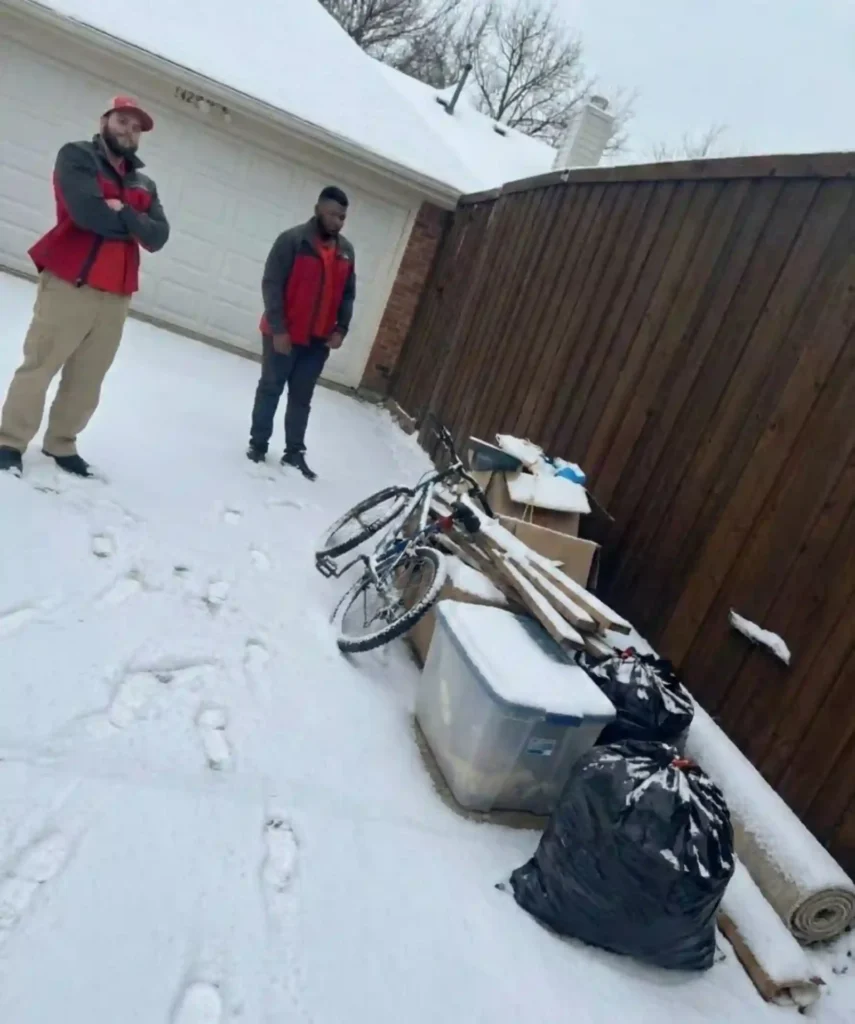
Post-winter storm cleanup in McKinney often involves storm debris, water-damaged household items, and garages filled with temporary storage.
For region-wide guidance on severe freeze damage and debris removal, explore our resource on Collin County winter freeze junk removal and cleanup.
After a winter storm, homeowners should first make the area safe, then separate damaged items from usable ones, remove storm debris, and decide whether items should be thrown away, donated, handled by city services, or removed professionally. Acting early helps prevent mold, safety hazards, and long-term clutter.
Quick summary
During post-winter storm cleanup in McKinney, homeowners often deal with storm debris, water-damaged household items, and garages filled with temporary storage. Some items must be discarded, some may still be donated, and others may qualify for city programs. This guide explains what to throw away, what to donate, the proper cleanup steps, free city options, and when calling a professional is the most practical solution.
Step 1: Stay Safe During Post-Winter Storm Cleanup in McKinney
Before starting cleanup:
- Wait until ice melts and walkways are clear
- Wear gloves and sturdy footwear
- Be cautious with heavy, wet, or unstable items
Storm-related debris is often heavier and more dangerous to move than normal household clutter.
Step 2: What to Throw Away After a Winter Storm
Items that absorbed water, froze, or cannot be fully dried are usually unsafe to keep. These commonly include:
- Mattresses and upholstered furniture exposed to moisture
- Wet or frozen cardboard boxes
- Rugs, carpet padding, and fabric items with lingering dampness
- Broken outdoor furniture or treated wood
- Items showing swelling, mold, or strong odors
If an item cannot be thoroughly cleaned and dried, disposal is typically recommended.
(Common service needs tied to this step include furniture removal, mattress disposal, and general junk removal.)
Step 3: What Can Be Donated After Storm Cleanup
Donation is only appropriate for items that are:
- Completely dry
- Structurally intact
- Free from mold, odors, or storm damage
Examples may include:
- Clothing that remained dry
- Small household items stored in sealed containers
- Furniture that was not exposed to water
If you plan to donate locally, Samaritan Inn is a common option in the McKinney area. Donation rules can change, so it’s important to check Samaritan Inn’s current donation guidelines before dropping items off.
(Items that cannot be donated often require garage cleanouts or real estate cleanout services.)
Step 4: How to Sort Storm Debris and Garage Piles
After storms, many homeowners move items into garages temporarily. Sorting early helps avoid repeated handling later.
If you’ve noticed your garage becoming long-term storage after severe weather, read why garages fill up after storms in McKinney and how to prevent clutter from becoming permanent.
A simple sorting method:
- Items to discard
- Items safe to donate
- Items that may qualify for city pickup
- Items requiring professional removal
Mixed piles are the most common reason post-storm cleanup gets delayed.
Step 5: What Free Cleanup Options the City of McKinney Offers
Residents who receive city trash service may be able to schedule bulky item pickup by appointment for eligible items. This option can work well for single, qualifying items that meet size and material guidelines.
However, city programs often do not accept:
- Bagged yard waste, brush, or limbs
- Treated wood or fence panels
- Pallets
- Construction or remodeling debris
- Mixed storm debris piles
City services also require scheduling, which may involve waiting after major storms.
Always confirm what qualifies by checking the City of McKinney’s current bulky item and storm debris guidelines before setting anything out.
(Storm piles that don’t qualify often require storm debris cleanup, yard waste removal, or construction debris removal. If your storm damage includes renovation scraps, fencing, drywall, or structural materials, review our guide on how to clean up construction site debris]to understand safe handling and disposal best practices.)
Step 6: When Calling a Professional Is the Better Option
Calling a junk removal company is often the best choice when:
- Debris includes mixed materials
- Items are heavy, wet, or bulky
- City pickup restrictions apply
- Timing matters
Professional removal can often be completed the same day, which helps prevent issues like blocked garages or driveways, HOA complaints, pests, and mold from wet items while waiting on city pickup.
Depending on what the storm left behind, homeowners often need help with storm debris cleanup, yard waste removal, furniture removal, appliance removal, and garage cleanouts.
For many homeowners, post-winter storm cleanup in McKinney is easiest when bulky, mixed, or time-sensitive debris is removed in one visit.
Step 7: Final Cleanup and Reset
Once debris is removed:
- Sweep and dry affected areas
- Check for lingering moisture
- Reorganize only what you’re keeping
This helps ensure storm-related clutter doesn’t become permanent.
Preparing seasonally can also reduce storm damage risks. Our fall cleanout guide for North Texas explains how proactive cleanup can prevent clutter buildup before winter weather hits.
Severe winter weather often leaves behind mixed debris that requires more than standard trash pickup. Homeowners dealing with fallen branches, damaged outdoor items, or water-affected materials often review guides on storm debris cleanup in McKinney to understand safe removal options after severe weather. Nearby communities experiencing similar storm impacts can also explore resources on junk removal services in Allen, TX, which explain how professional hauling services help remove bulky debris quickly and restore safe access to homes and garages.
Frequently Asked Questions
Items that absorbed water or froze—such as mattresses, wet furniture, cardboard, rugs, and damaged outdoor items—are usually best discarded.
Only items that remained dry, clean, and undamaged should be donated. Many donation centers do not accept storm-affected items.
Eligible residents may schedule bulky item pickup by appointment, but restrictions apply. Mixed or storm-related debris often does not qualify, so checking city guidelines is important.
Cleanup costs typically depend on volume, weight, debris condition, and access. Mixed or water-damaged loads often require more labor than standard household junk.
Professional cleanup is best when debris is bulky, mixed, time-sensitive, or not accepted by city programs—especially when quick removal is needed.