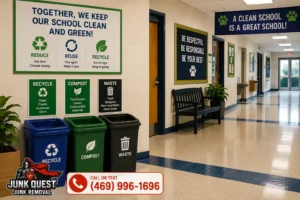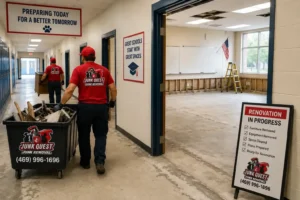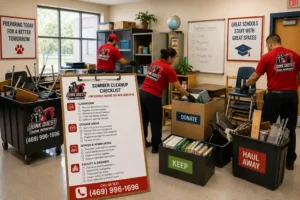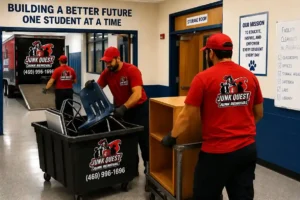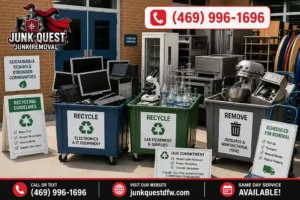
Schools dispose of old equipment through four pathways: donation to nonprofit partners for items in working condition, surplus auction through approved Texas state programs, recycling through licensed facilities for metal and electronics, and professional junk removal for broken or non-functional items with no reuse value. The correct pathway depends on the item’s condition, material type, and whether it was purchased with funding that triggers asset reporting requirements under Texas law. In North Dallas, equipment removal is most efficiently scheduled in June and July, before new equipment deliveries and faculty return deadlines close the summer access window.
Key Takeaways
- Schools have four disposal pathways for old equipment: donation to local nonprofit and community partners, surplus auction through the Texas Comptroller Surplus Property program, recycling through licensed facilities searchable via Earth911, and professional removal for broken items.
- Science lab equipment requires district safety officer clearance for chemical and biological residue before a junk removal crew can accept it.
- Cafeteria appliance removal must comply with EPA Section 608 refrigerant recovery requirements for commercial refrigeration units.
- Batteries, paint, fluorescent lighting, and chemical waste cannot go into standard dumpsters or waste bins under Texas law; these require separate hazardous waste or recycling handling.
- Technology equipment from schools is governed by Texas Administrative Code Chapter 328 and must be routed through certified e-waste disposal channels.
- Junk Quest prices school equipment removal by trailer volume, with cost including labor, hauling, taxes, and disposal.
What Are the Correct Disposal Options for Old School Equipment?
Four disposal pathways apply to school equipment, and each serves a different item condition and material type. Donation applies to equipment in full working order but no longer needed by the district; local nonprofit and community donation partners across North Dallas accept functional classroom and office equipment, and donation documentation can support district asset reporting requirements for federally funded items. District surplus auction applies to equipment with remaining functional value that exceeds what donation programs accept, listed through the Texas Comptroller of Public Accounts Surplus Property program, which gives Texas school districts a compliant pathway to liquidate surplus state or federally funded equipment. Recycling applies to metal-framed equipment (shelving, storage racks, structural lab furniture) through licensed scrap metal facilities, and to electronics through certified e-waste recyclers in compliance with Texas Administrative Code Chapter 328; recyclable materials can be searched by type and location through the Earth911 locator, which covers North Dallas zip codes. Professional removal applies to broken, non-functional, or end-of-life equipment that fails the donation and auction sort, handled by a licensed crew that loads, transports, and routes items to licensed disposal or recycling facilities in a single visit.
What Types of School Equipment Require Professional Removal?
Professional school equipment removal covers six categories across campus zones, with the full accepted and excluded items list on the Items We Take page. Science lab equipment includes outdated lab benches, broken equipment carts, decommissioned fume hood units, and surplus chemical storage cabinets that have been emptied and certified clear of regulated substances. Cafeteria and kitchen equipment includes commercial refrigeration units, food prep tables, cooking equipment, and cafeteria seating past service life. Technology and AV equipment includes non-functional projectors, outdated computers and monitors, broken smart boards, and surplus networking hardware. Athletic and physical education equipment includes broken weight room machinery, damaged practice mats, and decommissioned timing systems. Art and music equipment includes broken art tables, damaged easels, decommissioned kiln units, and worn instrument storage furniture. General classroom supplies and surplus includes accumulated multi-year overflow such as broken manipulatives and outdated curriculum materials that cannot be donated or recycled.
How Should Schools Handle Science Lab Equipment Disposal?
Science lab equipment disposal requires a two-step assessment before any removal crew arrives. The first step confirms that all chemical storage units, waste containers, and lab stations have been cleared and certified free of regulated substances by the district’s designated safety officer, since Junk Quest does not accept equipment containing residual chemicals, biological waste, or material classified as hazardous under the Texas Health and Safety Code; that material requires a licensed hazardous waste contractor operating under separate regulatory authority. Once lab equipment is certified clear, structural items including benches, carts, and storage cabinets fall within standard junk removal scope and are handled in the same crew visit as other campus equipment.
How Should Schools Dispose of Cafeteria and Kitchen Equipment?
Cafeteria and kitchen equipment disposal involves both appliance removal and structural removal in a single coordinated crew visit. Commercial refrigeration units, industrial ranges, and large food prep appliances are removed through appliance removal, which includes proper handling of refrigerant-containing units in compliance with EPA Section 608 refrigerant recovery requirements. Structural items including stainless steel shelving and bulk storage racks are removed alongside appliances in the same trailer load, scheduled to complete before new equipment deliveries arrive so the kitchen is clear for contractor installation.
What Is the Process for Technology and Electronics Disposal in Schools?
Technology and electronics disposal from school facilities is governed by Texas Administrative Code Chapter 328, which covers management requirements for electronics containing regulated materials including lead, cadmium, and mercury, so schools cannot place retired computers, monitors, projectors, or networking hardware in standard waste streams. Junk Quest routes school technology equipment through electronic waste disposal channels that comply with state requirements, removed in the same crew visit as furniture and other equipment with no separate scheduling required.
How Should Schools Dispose of Athletic Equipment?
Athletic equipment disposal covers broken weight room machinery, worn practice mats, and surplus storage from gymnasium facilities. Equipment in working condition is donation-eligible through local nonprofit and community athletic programs, while broken or structurally compromised equipment has no donation pathway and goes directly to professional removal. Metal components from weight room equipment are separated for recycling where volume justifies it, and the recycling pathway for specific metal types can be confirmed through the Earth911 locator before the removal crew arrives.
What School Equipment Cannot Go in Regular Waste Bins?
Several categories of school equipment cannot be placed in standard waste bins or dumpsters and require separate handling. Chemical and laboratory waste, including residual chemicals and biological materials, requires a licensed hazardous waste contractor and is excluded from junk removal scope regardless of volume. Paint and aerosol products, such as leftover art room paint and spray adhesives, are classified as household hazardous waste in Texas and require drop-off at approved collection sites. Batteries from classroom devices and emergency lighting units require separate recycling, since Texas law prohibits disposing of lead-acid batteries in standard waste streams. Fluorescent lighting and bulbs contain mercury and require recycling through licensed facilities rather than standard bin disposal.
How Much Does School Equipment Removal Cost in North Dallas?
School equipment removal in North Dallas is priced by trailer volume, with cost including labor, hauling, taxes, and disposal. A single-room equipment clearout or partial load typically requires less capacity and time than a multi-room job combining furniture and equipment, or a full cafeteria or gymnasium clearout. All pricing is confirmed on-site after the crew lead walks the designated zones before loading begins. Facilities managers can request an exact quote by calling (469) 996-1696.
How Does Junk Quest Handle School Equipment Removal in North Dallas?
Junk Quest provides commercial school equipment removal for district and campus facilities managers across McKinney, Frisco, Allen, Plano, Prosper, Wylie, and Garland. Every job begins with an on-site walk-through to assess item categories, confirm donation and recycling separation, and verify access points before the crew loads a single item. For jobs combining furniture and equipment removal in a single visit, the most common configuration for school district cleanouts, see how much furniture removal costs in North Dallas for scope and pricing details.
What Is the Best Way to Dispose of Old School Equipment?
Schools can dispose of old equipment by sorting each item according to its condition, material type, and potential for reuse: donate working equipment, sell surplus items through approved programs, recycle eligible metal and electronics, and arrange professional removal for broken or non-functional items. Special handling may be required for equipment containing chemicals, batteries, refrigerants, or other regulated materials, so these items should be separated before removal. For schools across North Dallas, Junk Quest can help with the lifting, loading, hauling, recycling, and disposal of eligible furniture and equipment, making it easier to clear classrooms, cafeterias, gyms, and other campus areas before the new school year.
Schedule Your School Equipment Removal Assessment
Need to remove outdated school equipment, furniture, or surplus items before the next term? Contact Junk Quest to schedule a school equipment removal assessment and get help planning your campus cleanout. Call (469) 996-1696 to arrange a convenient pickup.
Frequently Asked Questions
1. What should schools do with old equipment before the new school year?
Schools should sort old equipment into four disposal pathways: donate working items to nonprofit partners, list surplus items through the Texas Comptroller Surplus Property program, recycle metal and electronic materials through licensed facilities, and schedule professional junk removal for broken items. Running this sort at the end of the school year gives facilities managers a clear scope before summer scheduling begins.
2. Does school equipment removal include cafeteria appliances?
Yes. Cafeteria appliances, including commercial refrigerators and food prep equipment, are removed in the same crew visit as other school equipment. Refrigerant-containing units are handled in compliance with EPA Section 608 refrigerant recovery requirements.
3. What school equipment cannot be placed in standard dumpsters?
Chemicals, biological waste, paint, aerosol products, batteries, and fluorescent lighting cannot go into standard waste bins or dumpsters under Texas law. These require licensed hazardous waste contractors or approved recycling drop-off sites, and Junk Quest does not accept these categories directly.
4. Can Junk Quest handle equipment removal and furniture removal in the same visit?
Yes. Furniture and equipment removal are handled in the same crew visit on most school district jobs. Combined jobs are assessed by total volume during the on-site walk and priced by trailer capacity, with multi-room and multi-zone jobs scheduled as half-day or full-day blocks.
5. How should schools dispose of old computers and technology equipment?
Schools must dispose of computers, monitors, and electronics through certified e-waste recyclers in compliance with Texas Administrative Code Chapter 328, which prohibits regulated electronics from standard waste streams. Junk Quest routes school technology equipment through compliant e-waste disposal channels in a single removal visit alongside other equipment.
6. When should North Dallas schools schedule equipment removal for the new school year?
Schools should schedule equipment removal in the first two weeks of June. This clears the space that cafeteria vendors, technology installers, and janitorial crews need by late June, since August scheduling tightens as district opening deadlines approach.