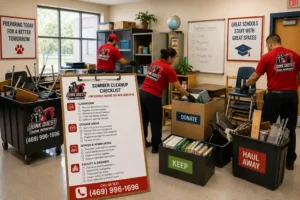
Schools can remove and recycle outdated equipment by first categorizing it by type, since electronics, lab equipment, and cafeteria appliances each require different disposal channels. Electronics need dedicated e-waste recycling because of the materials they contain, lab equipment sometimes requires special handling depending on what it was used for, and large appliances typically need an outside crew because of size and weight. Sorting by category before scheduling removal keeps recoverable material out of the landfill.
Why Can’t Outdated School Equipment Just Be Thrown Away?
Outdated school equipment can’t simply be thrown away in most cases because electronics and certain lab or cafeteria items contain materials that municipal waste streams are not set up to handle. Requirements vary by state and by district, so the specific rules that apply to a campus are worth confirming with the district before anything is hauled off. The EPA publishes guidance on electronics donation and recycling that covers how these materials are routed once they leave a building.
There is also a practical reason beyond compliance. Equipment that still works, or that contains recoverable metal, has value that disappears the moment it goes in a dumpster.
How Should Outdated Computers and Electronics Be Handled?
Outdated computers and electronics should be routed through dedicated e-waste recycling rather than standard trash or general recycling bins, since they contain components that require specialized processing. Many districts also have data security requirements for computers and devices that stored student or staff information, which needs to be addressed before disposal. The Texas Commission on Environmental Quality (TCEQ) regulates electronic waste disposal standards that apply to schools operating in Texas.
What Should Be Done With Outdated Lab or Science Equipment?
Outdated lab or science equipment should be evaluated piece by piece, since some items are simple to recycle as scrap while others may have handled chemicals or biological material that requires a separate disposal protocol. Basic glassware and non-hazardous items can typically go through standard recycling or donation.
Anything that contacted chemicals should follow the district’s hazardous materials procedures instead. When the history of a piece is unclear, treating it as requiring special handling is the safer default.
School Equipment Disposal by Category
| Equipment type | Disposal path | Notes |
| Computers, tablets, electronics | E-waste recycling | Data wipe required before disposal |
| Lab / science equipment | Case-by-case: recycle, donate, or hazardous disposal | Check for chemical or biological contact history |
| Cafeteria appliances | Outside removal crew | Heavy, often needs commercial-grade hauling |
| Classroom AV (projectors, displays) | E-waste recycling, or donation if functional | Functional units are often donatable |
How Should Large Cafeteria and Kitchen Equipment Be Removed?
Large cafeteria and kitchen equipment, such as walk-in coolers, commercial ovens, and freezers, generally needs an outside crew because of size, weight, and in some cases refrigerant handling. Junk Quest’s commercial freezer removal service covers this equipment type, which is handled differently from classroom furniture or electronics.
When Should Schools Bring In an Outside Crew?
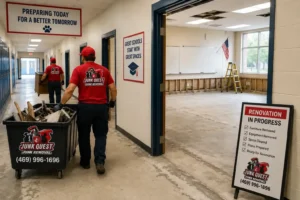
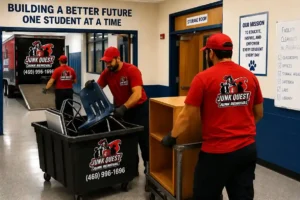
The threshold is usually volume, access, or timing rather than the equipment itself. Once a clearout spans multiple classrooms, requires moving items through corridors and stairwells, or has to finish before staff return, in-house handling starts costing more staff hours than it saves. The benefits of office junk removal apply directly, since a school clearout mirrors a large office turnover in both volume and lifting.
Can Outdated School Equipment Be Donated Instead of Recycled?
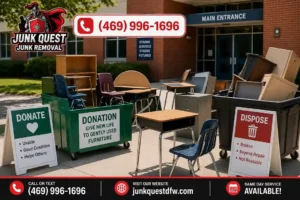
Yes, outdated school equipment can often be donated instead of recycled when it still functions, even if newer models have replaced it. Working computers, projectors, and general classroom electronics are commonly accepted by other schools, nonprofit education programs, and refurbishment organizations. The items office junk removal companies take break down the same way here, sorting donation-eligible units from recycling-only ones.
Where Junk Quest Serves
Junk Quest provides commercial and facilities cleanout across McKinney, Frisco, Allen, Plano, Prosper, Wylie, and Garland, plus the surrounding North Dallas area. That covers outdated equipment removal, donation sorting, and e-waste-eligible electronics.
How Should Schools Handle Outdated Equipment?
Effective school equipment disposal starts with sorting equipment by type, condition, and disposal requirements. Schools should donate functional items, route electronics through e-waste recycling, follow special handling procedures for lab equipment, and use professional removal for large or multi-room clearouts.
Schedule Your Equipment Removal
Need help removing outdated school equipment? Call Junk Quest at (469) 996-1696 or visit Junk Quest for a no-obligation upfront quote.
Junk Quest
7149 Van Tuyl Pkwy, McKinney, TX 75070
(469) 996-1696
Backed by 900+ reviews | No-obligation upfront quote
Frequently Asked Questions
1. Who is responsible for wiping data before computers are removed?
The district retains responsibility for the data on its devices. Confirm what the removal service does and does not handle before the equipment leaves the building, and treat the wipe as a step to complete on site rather than one to delegate.
2. Does equipment under lease or active warranty need different handling?
Often yes. Leased devices usually have to be returned rather than recycled, and disposing of an item still under warranty can void a replacement claim. Check the terms before the equipment is scheduled for pickup.
3. When is the best time of year to schedule equipment removal?
The break between school years is usually the cleanest window, since rooms are empty and corridors are clear. Scheduling removal to land before replacement equipment arrives avoids stacking displaced items in hallways.
4. Can equipment removal happen while school is in session?
It can, though it usually means staging the work outside instructional hours and routing crews away from student areas. Flag the constraint when scheduling so access and timing are planned around it.
5. Do asset tags or inventory records need updating before removal?
Tagged items are tracked in district inventory, so records generally need updating as part of disposal. Pull the tag numbers before pickup rather than after, since identifying a unit once it has left the building is difficult.
Key Takeaways
- Sort by category first, since electronics, lab equipment, and appliances each take a different disposal path.
- Electronics go to dedicated e-waste recycling, and any device that stored data should be wiped before it leaves the building.
- Lab equipment that contacts chemicals or biological material needs special handling, not standard recycling.
- Functional equipment can often be donated to other schools or nonprofit programs instead of recycled.
- Leased or tagged equipment usually has return and inventory steps to clear before disposal.
- Large cafeteria and kitchen equipment generally needs an outside crew because of weight and refrigerant handling.