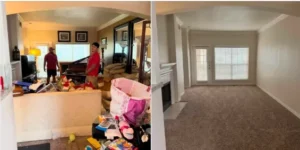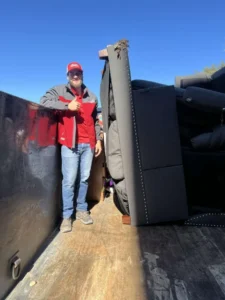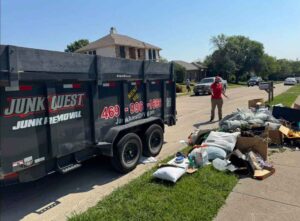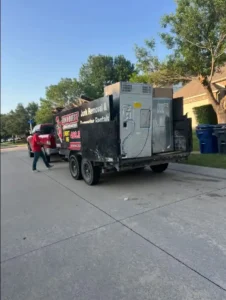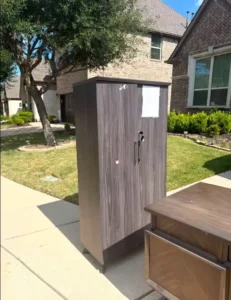
After a Texas eviction, the landlord takes the unit back through a writ of possession. A constable or sheriff executes the writ no sooner than 24 hours after posting a warning on the front door. The landlord removes any belongings still inside while the officer supervises, then sets them outside the unit. If the officer prefers, a bonded warehouseman stores them instead. After that, the eviction cleanout begins. The landlord documents the unit, clears out anything the tenant did not reclaim, and starts the turnover.
Key Takeaways
- The court cannot issue a writ of possession before the sixth day after the eviction judgment. The only exception is when a possession bond applies.
- A landlord is not liable for damages to the tenant that result from an officer executing the writ.
- Removed belongings go outside the unit, never blocking a sidewalk or street, and never while it is raining, sleeting, or snowing.
- The officer, not the landlord, decides whether a warehouseman stores the property. The landlord does not have to store it.
- A city may supply a closed container for removed belongings and dispose of the contents if they go unclaimed within a reasonable time.
What happens on the day the writ of possession is executed?
The constable or sheriff arrives at the time stated on the posted warning, delivers possession to the landlord, and tells every occupant to leave. If anyone refuses, the officer can physically remove them and may use reasonable force under the statute.
The officer then supervises removal of all personal property that does not belong to the landlord. Texas Property Code Section 24.0061 requires those items to be placed at a nearby spot outside the unit. If the officer chooses storage instead, a bonded or insured warehouseman hauls the items away at no cost to the landlord.
Who is allowed to carry the tenant’s belongings out?
During the writ, the tenant, the landlord, the landlord’s representatives, or other people working under the officer’s supervision can carry the property out. The landlord does not have to do the lifting alone.
Many landlords line up helpers for writ day so the carry-out finishes in one visit. If you plan to help with the cleanout, confirm the plan with the constable’s office ahead of time. The officer runs the scene until the landlord regains possession.
What happens to belongings a warehouseman stores?
A bonded or insured warehouseman who stores the property gets a lien for reasonable moving and storage charges. The tenant can reclaim items free of charge while the warehouseman is still loading at the property.
Within 30 days of storage, the tenant can redeem certain protected items by paying only the charges tied to those pieces. Examples are one couch, two living room chairs, and a dining table. After 30 days, the warehouseman may sell the property to cover the charges. TexasLawHelp.org explains the redemption steps in plain language for both sides.
What if the tenant moved out before the eviction finished?
Under Section 92.0081, a landlord can remove the contents of a unit the tenant has abandoned without a writ. The lease usually defines what counts as abandonment and what notice the landlord must give first.
Follow that lease language step by step and keep a record of each notice. Once abandonment is confirmed, the job looks like any tenant cleanout service: every room, closet, and designated storage area is cleared in one appointment.
How does an eviction cleanout differ from a standard tenant move-out?
An eviction cleanout follows a court order and an officer’s timeline. A move-out cleanout follows the tenant’s own departure. That difference changes who controls the schedule and how much is usually left behind.
| Factor | Tenant move-out cleanout | Eviction cleanout |
| How the unit is vacated | Tenant leaves voluntarily | Officer executes a writ of possession |
| Legal trigger | End of lease or notice to vacate | Justice court judgment and writ |
| Who sets the date | Tenant and landlord | Court and executing officer |
| Typical volume left | Scattered items and trash | Often most of the household |
| What to confirm first | Lease move-out terms | Which items were set outside or stored |
What should landlords do before the cleanout crew arrives?
Document the unit first, then mark what stays. Photos and video of every room protect deposit deductions and answer any later dispute about the unit’s condition.
Tag any furniture or appliances the landlord supplied so the crew does not haul them away by mistake. If someone set items outside during the writ, ask your attorney or the executing officer when you may remove them. A rental property cleanout checklist keeps repairs, cleaning, and listing in the right order after the unit is empty.
Your Eviction Cleanout in Texas Starts Where the Writ Ends
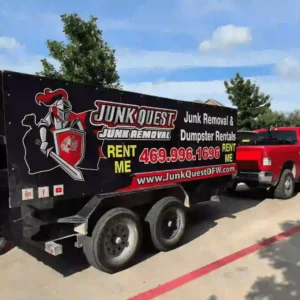
An eviction cleanout in Texas runs on legal timing first and logistics second. Once the officer hands over possession and settles any storage questions, three jobs remain: clearing the unit, documenting it, and getting it ready for the next tenant. Junk Quest’s property cleanout service covers that final stage for single-family rentals and apartment units across North Dallas.
Get the Unit Back on the Market Sooner
Call Junk Quest at (469) 996-1696 for an upfront, no-obligation quote on your eviction cleanout. The team works from 7149 Van Tuyl Pkwy, McKinney, TX 75070. It serves landlords and property managers through its McKinney junk removal team and across Plano, Frisco, and Allen.
Frequently Asked Questions
1. Can a Texas landlord change the locks and throw out a tenant’s things without going to court?
No. Section 92.0081 bars a landlord from keeping a tenant out without judicial process. The only exceptions are repairs, emergencies, abandonment, or a properly noticed lock change for unpaid rent. Clearing belongings without a writ or confirmed abandonment exposes the landlord to a wrongful lockout claim.
2. Does an eviction cleanout include appliances the tenant left behind?
Yes. Junk Quest can disconnect tenant-owned refrigerators, washers, dryers, and freezers and haul them with the rest of the load. Landlord-supplied units stay unless you mark them for removal. Junk Quest’s appliance removal for landlords covers both cases.
3. Will the cleanout crew haul paint, solvents, or propane tanks left in the unit?
No. Standard junk removal crews cannot transport hazardous materials such as paint, solvents, propane, motor oil, or pesticides. Set these aside for a household hazardous waste drop-off and tell Junk Quest about them before the appointment.
4. How much does an eviction cleanout cost in McKinney?
$120 is Junk Quest’s minimum. The final price scales with how much truck space the items fill, measured in cubic yards. Junk Quest confirms your upfront quote before loading starts. The price does not change afterward, and Junk Quest does not bill by the hour.
5. Can usable furniture from an eviction cleanout be donated?
Yes, once the landlord has the right to dispose of the items. Furniture and household goods in good condition can go to organizations such as Habitat for Humanity ReStore, which also reduces the volume you pay to haul.