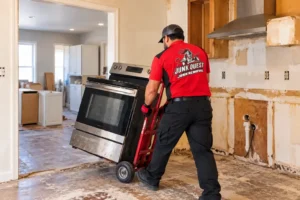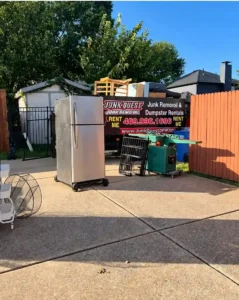
Restaurant equipment removal usually means selling working pieces to a used equipment dealer and hiring a removal crew to haul the rest to scrap recycling. Before anything is hauled, licensed trades disconnect the gas and electrical lines, the fryer oil is drained, and a licensed company takes the hood fire suppression system offline. In North Dallas, most restaurant owners book a junk removal company such as Junk Quest after closing or before opening, so the kitchen never loses a service day.
Key Takeaways
- Stainless steel equipment has scrap value, so non-working ovens, fryers and prep tables can be recycled instead of landfilled.
- In Texas, gas disconnection requires a licensed plumber, and hood suppression work requires a company licensed by the State Fire Marshal’s Office.
- Fryer oil and grease trap waste go to specialist services, not general junk haulers.
- Newer, working, name-brand equipment often sells through used restaurant equipment dealers or auctions.
- Junk Quest works 6 a.m. to midnight, seven days a week, so pickups can be scheduled around service.
What Commercial Kitchen Equipment Can Be Removed?
Nearly everything that isn’t built into the building can be removed, including the cooking line, dish area, prep stations and dry storage.
Common pieces in a restaurant equipment removal job include:
- Convection ovens, pizza ovens and combi ovens
- Ranges, griddles, flat tops and charbroilers
- Deep fryers (drained)
- Commercial dishwashers and three-compartment sinks
- Stainless prep tables, worktables and wire shelving
- Ice machines, soda systems and beverage dispensers
- Microwaves, food warmers and steam tables
- Booths, tables, chairs and dining room décor
Walk-in and reach-in freezers are a separate job, covered on the commercial freezer removal page.
What Has to Happen Before Restaurant Equipment Is Hauled?
Equipment must be disconnected and emptied before a crew can move it. Removal crews carry the equipment out, but several steps belong to licensed trades or specialist services.
| Task | Who Handles It | Why It Matters |
| Gas line shutoff and capping | Licensed plumber (Texas State Board of Plumbing Examiners) | Prevents gas leaks when ranges, fryers and ovens are pulled |
| Hardwired electrical disconnect | Licensed electrician | Many dish machines and ovens are wired directly into the panel |
| Hood fire suppression system | Company licensed by the Texas State Fire Marshal’s Office | Suppression lines are often tied to gas shutoffs and must be deactivated properly |
| Fryer oil | Used cooking oil collection service | Oil cannot be poured down drains or loaded with equipment |
| Grease trap or interceptor | Licensed liquid waste hauler | Covered by city fats, oils and grease (FOG) programs |
| Ice machine and dish machine water lines | Plumber or maintenance tech | Stops leaks and flooding once units are pulled |
Schedule the grease trap pump-out for the same week the equipment is removed. Cities such as Plano run fats, oils and grease programs for food businesses, and the regional Defend Your Drains North Texas campaign explains why grease traps must be maintained.
Should You Sell, Consign, Recycle or Haul Old Restaurant Equipment?
Sell equipment that works and that buyers want, and recycle or haul everything else. The choice usually comes down to age, condition and how fast you need the space.
| Route | Best For | Trade-Off |
| Used equipment dealer | Newer, working, name-brand pieces | Offers are well below retail, and the dealer chooses what it takes |
| Auction | Full restaurant closures with a lot of equipment | Takes weeks to organize, and returns depend on turnout |
| Donation | Working smallwares and equipment for schools, churches or nonprofits | The recipient needs the space and hookups |
| Scrap recycling | Non-working stainless steel equipment | Requires hauling and a vehicle that can take the weight |
| Commercial removal crew | Mixed loads, tight deadlines, anything left after selling | Priced by trailer volume |
Many owners combine routes. They sell the two-year-old combi oven to a dealer, then book a crew for the worn fryers, bent shelving and dining room furniture the dealer didn’t want. Non-working stainless pieces go to scrap metal recycling.
How Do You Schedule Restaurant Equipment Removal Without Losing Service Days?
Schedule removal after closing or before opening, and confirm building access in advance. Junk Quest’s hours run 6 a.m. to midnight, seven days a week, which leaves room to work around lunch and dinner service.
Three things keep the day on track:
- Loading access. Confirm the back door, loading dock or alley route, and measure door widths for large pieces like hood sections and dish machines.
- Landlord and shopping center rules. Shopping centers and mixed-use buildings in Frisco, Plano and McKinney often set approved hours for deliveries and removals.
- Timing with installers. When upgrading, remove old equipment the day before the new equipment is installed, so the installer has clear floor space and access to the utilities.
For a full closure or lease end, the same crew can clear equipment, furniture and storage together through a commercial junk removal and cleanout.
How Much Does Restaurant Equipment Removal Cost?
Junk Quest’s minimum job is $120, and the price scales up based on how much space the equipment takes up in its 20-yard trailer. The price includes labor, hauling, taxes and disposal.
| Price Factor | How It Affects a Restaurant Job |
| Volume | More trailer space means a higher price; one fryer costs less than a full cooking line |
| Material type | Heavy stainless equipment and debris such as tile or concrete weigh more than household items |
| Labor | Stairs, long carries from the kitchen and any disassembly add time |
| Accessibility | A loading dock or rear door is faster than a front entrance or second-floor space |
To get a quote, call (469) 996-1696 or send a photo of the equipment through the quote form. You get the full price before any work begins, so you can change the list if a dealer buys some pieces first.
How Do You Plan Restaurant Equipment Removal From Start to Finish?
Have the licensed trades go first and the haul come last. Disconnect gas and power, take the hood suppression offline, have oil and grease collected by the right services, sell what has value, and book one crew for the rest.
Need Restaurant Equipment Removed in North Dallas?
Junk Quest is a locally owned junk removal company based in McKinney, TX. It removes commercial kitchen equipment for restaurants, cafés and food service businesses across North Dallas, with pickups from 6 a.m. to midnight, seven days a week.
Book appliance removal for your kitchen in two ways:
- Call (469) 996-1696 for a quote over the phone.
- Contact Junk Quest online and send a photo of the equipment for a fast, upfront price.
Frequently Asked Questions
1. Will a junk removal company take a deep fryer with oil in it?
No. The fryer must be drained first, and the oil should go to a used cooking oil collection service. Once it’s empty, the fryer can be hauled and recycled.
2. Can old restaurant equipment be recycled?
Yes. Scrap metal recyclers recover the stainless steel, aluminum and copper from ovens, tables, sinks and refrigeration equipment, even when it no longer works.
3. Do you need a permit to remove commercial kitchen equipment?
Removal by itself is rarely the permitted part of the job. Permits usually apply to the gas, electrical and fire suppression work and to the new installation, so check with your city’s building department before you start.
4. Can restaurant equipment be removed at night or before opening?
Yes. Junk Quest schedules pickups between 6 a.m. and midnight, seven days a week, so the kitchen can stay open for service. Confirm access times with your landlord or shopping center first.
5. Will a removal crew take everything from a restaurant kitchen?
No. Used cooking oil, grease trap waste, propane tanks and chemicals need specialist handling. Check the full list of items Junk Quest takes before the crew arrives.