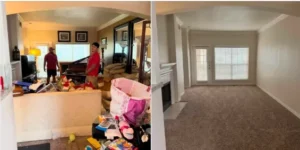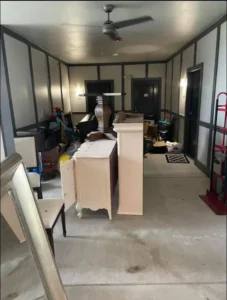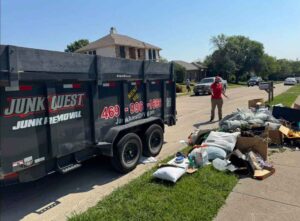
The estate sale comes first and the estate cleanout comes second. Hold the sale while the house is still full so buyers see everything. Then book the cleanout to clear the unsold furniture, worn items, and trash that remain. Reversing the order means paying to haul away items that could have been sold.
Key Takeaways
- Keepsakes, personal documents, medications, and valuables come out of the house before the sale opens.
- An estate sale is worth running when the home holds items with resale value; when most contents are worn or dated, go straight to the cleanout.
- Every item sold at the sale is one less item to haul, which lowers a volume-based cleanout price.
- The IRS requires donated household items to be in at least good used condition to be deductible.
- Booking the cleanout date before the sale ends keeps leftovers from sitting in the house.
Why does the estate sale usually come first?
An estate sale needs a full house to work. Buyers come for furniture, tools, kitchenware, and collectibles displayed in place, and a half-cleared home draws fewer of them.
The order also protects the budget. Junk Quest prices cleanouts by how much truck space the items fill, so everything that sells shrinks the final load. The estate cleanout service then picks up where the sale stops.
When does it make sense to skip the estate sale?
Skip the sale when the contents have little resale value or the deadline leaves no room for one. A sale that earns less than the effort it takes is not worth delaying the listing or closing.
Common candidates are homes filled mostly with:
- worn upholstery
- dated electronics
- broken furniture
- years of stored paper
Small apartments and condos with modest furnishings often go straight to a cleanout too. Donation sorting still keeps usable pieces in circulation.
What is the right order from start to finish?
Start with what cannot be replaced and finish with what nobody wants. Each step clears the way for the next.
- Secure personal documents, photos, jewelry, medications, and firearms.
- Let family members claim keepsakes and heirlooms.
- Have high-value items appraised if anyone suspects they are worth more than they look.
- Hold the estate sale.
- Book the estate cleanout for the unsold items and trash.
- Do a final walkthrough, then move on to cleaning, repairs, and listing.
For a closer look at the removal stage itself, see how estate cleanouts work.
How do an estate sale and an estate cleanout compare?
An estate sale turns belongings into money. An estate cleanout turns the leftovers into an empty house. They solve different problems, which is why most families need both.
| Factor | Estate sale | Estate cleanout |
| Goal | Sell items with resale value | Clear everything that remains |
| Who runs it | Family or an estate sale company | A junk removal crew |
| Money flow | Earns money for the estate | Costs money, priced by volume |
| What leaves the house | Items buyers choose | Unsold items, donations, recycling, trash |
| Where it falls | Step 4 | Step 5 |
| What remains afterward | Leftovers | An empty, broom-swept home |
What happens to the items left after the sale?
Leftovers are split three ways:
- Donate: usable furniture and household goods go to charities.
- Recycle: metals and electronics go to recyclers.
- Dispose: only what is left goes to the landfill.
Families can set items aside for groups such as Habitat for Humanity ReStore or the Salvation Army Family Store. Junk Quest’s guide on whether to donate, recycle, or throw away helps sort the rest.
If the estate plans to claim a deduction, the IRS rules on substantiating charitable contributions require a written acknowledgment from the charity for any single contribution of $250 or more. This is general information, not tax advice, so confirm deductions with the estate’s tax preparer.
How much time should you leave between the sale and the cleanout?
Book the cleanout for the first days after the sale closes. Leftovers sitting in an empty-looking house slow down cleaning, repairs, and photography for the listing.
Planning the cleanout a week or more ahead also tends to keep the price steadier, since appointments squeezed into busy periods can cost more. Lock in the date as soon as the sale dates are set.
Getting the Estate Sale vs Estate Cleanout Order Right
The estate sale vs estate cleanout question has a consistent answer: sell first, clear second. The sale captures value while the house is full. The cleanout handles whatever buyers leave behind, with donation and recycling sorting built in. Skip the sale only when the contents or the calendar make it pointless.
Clear What the Sale Leaves Behind
Call Junk Quest at (469) 996-1696 to schedule your estate cleanout around your sale dates and get an upfront quote before the crew starts. Junk Quest is based at 7149 Van Tuyl Pkwy, McKinney, TX 75070. It serves families through its McKinney junk removal team and across Plano, Frisco, and Allen.
Frequently Asked Questions
1. Do estate sale companies remove the items that do not sell?
No, not always. Some offer a buyout or cleanout add-on, but many leave unsold items in the house once the sale ends. Ask before signing, and book a separate cleanout if removal is not in the contract.
2. Does Junk Quest take furniture that did not sell at the estate sale?
Yes. Unsold couches, dressers, mattresses, tables, and appliances are all part of a standard cleanout, including pieces too heavy for the family to move. The crew does all of the lifting and loading.
3. How much does an estate cleanout cost after an estate sale?
$120 is Junk Quest’s minimum, and the price scales with the truck volume the leftovers fill. The quote is confirmed before loading starts and does not change after the job, with no hourly billing.
4. Should old paperwork be thrown out during the estate cleanout?
No. Keep bank statements, tax returns, deeds, titles, and insurance policies until the executor confirms they are no longer needed for probate or tax filings. Pull these out before the sale and before the cleanout crew arrives.