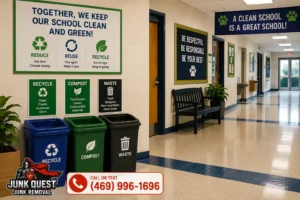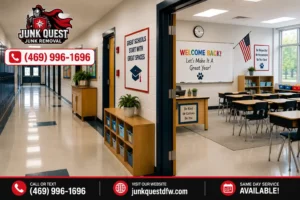
A school facility preparation checklist includes 10 key tasks: junk removal, HVAC servicing, deep cleaning, furniture replacement, construction debris removal, grounds inspection, storage room clearing, technology auditing, safety checks, and classroom staging. Campuses typically complete these over 8 to 10 weeks before students return, with Junk Quest handling junk removal for North Dallas schools.
Key Takeaways
- The checklist splits into two parallel tracks: janitorial and maintenance work, and bulk removal work.
- Junk removal runs first, clearing floor access before janitorial, HVAC, and staging crews begin.
- Junk removal covers items 1, 4, 5, 6, 7, and 8 on the checklist.
- ASHRAE Standard 62.1 sets minimum ventilation rates for occupied educational buildings.
- Non-functional technology routes to recyclers registered under Texas Administrative Code Chapter 328.
- Junk Quest prices its portion by trailer volume, with cost covering labor, hauling, taxes, and disposal.
Why Facility Preparation Runs on Two Parallel Tracks
A school facility preparation checklist splits campus work into two categories that run alongside each other. Facilities staff and contracted janitorial crews handle maintenance and cleaning. An insured junk removal crew handles bulk removal. Both follow a defined order, which prevents crew conflicts, protects new equipment deliveries, and holds district readiness deadlines.
The 10-Item School Facility Preparation Checklist
1. Schedule and complete all bulk junk removal
Junk removal runs first. Crews clear broken furniture, outdated equipment, surplus storage contents, and post-renovation debris before janitorial teams can reach floors, walls, and surfaces. Booking removal in the first two weeks of June keeps the rest of the checklist on schedule. The items we take list documents accepted items across all campus zones.
2. Inspect and service HVAC and ventilation systems
ASHRAE Standard 62.1 sets minimum ventilation rates for acceptable indoor air quality in occupied educational buildings. Facilities managers confirm serviced air handlers, replaced filters, inspected ducts, and calibrated thermostats across every occupied zone. North Texas heat loads mean systems running through June and July need inspection before September occupancy, regardless of service age.
3. Deep clean all restrooms, hallways, and common areas
Janitorial crews begin the deep clean once bulk items are gone and HVAC service is complete. Restrooms need fixture disinfection, tile regrout inspection, drain clearing, and water fountain filter replacement. Districts test drinking water outlets under the EPA 3Ts program for schools and child care facilities. Hallways and common areas need floor stripping, refinishing, and lighting inspection.
4. Replace or remove broken classroom furniture
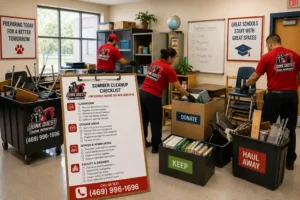
Removal crews clear broken desks, damaged chairs, and outdated storage units flagged at end-of-year checkout before new furniture arrives, which requires scheduling against the furniture vendor’s delivery window. For administrative wings, see how to get rid of office furniture responsibly.
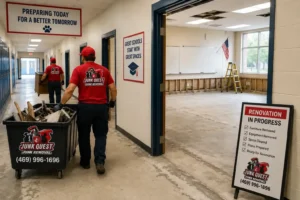
5. Clear post-renovation construction debris
Summer renovation generates drywall scraps, flooring waste, ceiling tile debris, and packaging that standard waste bins cannot take. Construction debris removal runs between contractor phases, keeping worksites accessible when renovation timelines and district opening dates are both fixed.
6. Inspect and service outdoor grounds
Grounds inspection covers athletic fields, landscaping, fencing, parking areas, and outdoor storage buildings. Facilities managers confirm mowing, edging, irrigation testing, and perimeter repairs before the campus opens. Crews clear outdoor storage contents such as seasonal decorations, damaged field equipment, and surplus furniture in the same pass as indoor zones.
7. Clear all campus storage rooms and hallways
Storage rooms accumulate surplus across multiple school years and go unnoticed until they block access or violate fire egress requirements. Sorting every room during summer break separates items for donation, recycling, or removal before faculty return. Storage cleanouts price as a separate line item based on total volume across all rooms in one crew visit.
8. Audit and test all classroom technology and AV systems
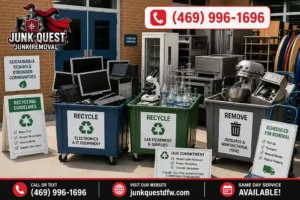
Technology audits cover projectors, smart boards, desktop computers, and networking hardware in every classroom. Non-functional units route to recycling processors registered under Texas Administrative Code Chapter 328. Crews collect them alongside furniture and equipment, so no separate scheduling is needed. See how businesses dispose of electronic waste for lab and technology disposal detail.
9. Conduct a full campus safety and compliance walkthrough
The walkthrough confirms unobstructed fire exits, functional emergency lighting, and stocked first aid stations. It also confirms that any hazardous materials found during cleanout went to licensed disposal contractors rather than staying on campus. Chemicals, biological waste, paint, and fluorescent lighting fall outside junk removal scope and need resolving separately first.
10. Stage all classrooms and administrative spaces for faculty setup
With removal, cleaning, renovation, and inspection complete, crews position new furniture, install technology, and stock supply stations. Faculty typically get campus access one to two weeks before students return. Staging only works once the first nine items are done, and any outstanding task delays classroom readiness.
How Much Does the Junk Removal Portion of This Checklist Cost?
Junk removal across this checklist prices by trailer volume, with cost covering labor, hauling, taxes, and disposal. A single-room or light storage clearout takes less capacity and time than a multi-room cleanout, a full wing clearout, or combined post-renovation debris and furniture removal. The crew lead walks the designated zones and confirms pricing on-site before loading begins. Facilities managers can request a no-obligation upfront quote by calling (469) 996-1696.
How Does Junk Quest Support This Checklist in North Dallas?
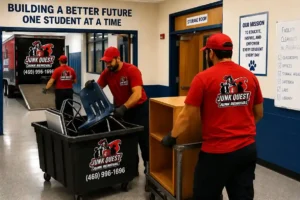
Junk Quest handles the junk removal portion of this checklist, items 1, 4, 5, 6, 7, and 8, for school district and campus facilities managers acrossMcKinney, Frisco, Allen, Plano, Prosper, Wylie, and Garland.
Every job opens with an on-site walk-through that confirms scope, access requirements, and donation and recycling separation before loading starts. Crews remove unwanted furniture, outdated equipment, storage clutter, and other bulk items as one coordinated part of facility preparation.
How Can Schools Get Their Facilities Ready Before Students Return?
Schools can prepare their facilities for students by following a structured sequence that clears unwanted items, completes maintenance and deep cleaning, removes renovation debris, inspects outdoor and storage areas, audits classroom technology, confirms safety requirements, and stages classrooms for faculty setup. Completing these tasks in the right order helps prevent scheduling conflicts and ensures crews have clear access to classrooms, hallways, and other campus spaces. For North Dallas schools, Junk Quest can support the bulk removal portion by hauling unwanted furniture, outdated equipment, storage clutter, outdoor surplus, and eligible construction debris so facilities are ready for the final cleaning and setup stages before the new school year begins.
Schedule Your School Facility Assessment
Preparing your campus for the next school year? Call (469) 996-1696 or visit Junk Quest to schedule a school facility assessment and plan your removal needs before summer scheduling fills up. Backed by 900+ reviews, Junk Quest confirms scope on-site and provides a no-obligation upfront quote before any loading begins.
Frequently Asked Questions
1. What is a school facility preparation checklist?
A sequenced 10-item task list covering every physical area of a campus before students return: bulk junk removal, HVAC servicing, deep cleaning, furniture replacement, post-renovation debris removal, grounds inspection, storage room clearing, technology auditing, safety walkthroughs, and classroom staging.
2. How long does it take to complete the school facility checklist?
8 to 10 weeks starting mid-June. Junk removal finishes in weeks 1 and 2, janitorial deep cleaning runs weeks 3 through 5, post-renovation debris removal covers weeks 6 through 8, and staging and final inspection close out weeks 9 and 10 before faculty return in mid-August.
3. Which items on the checklist require a junk removal crew?
Items 1, 4, 5, 6, 7, and 8: bulk removal, broken furniture clearout, post-renovation debris, outdoor grounds surplus, storage room clearing, and non-functional technology disposal. Janitorial crews, HVAC contractors, and safety inspectors cover the rest.
4. Do schools need to complete the checklist in a specific order?
Yes. Junk removal runs first so janitorial crews get unobstructed access. HVAC service runs alongside or immediately after. Deep cleaning follows, post-renovation debris removal lands mid-sequence before furniture delivery, and staging runs last.
5. What happens if the checklist is not completed before faculty return?
Outstanding removal, cleaning, or repair tasks collide with faculty setup and furniture delivery timelines. Incomplete storage room clearing can trigger fire code issues, and incomplete HVAC service may fall short of ASHRAE Standard 62.1 ventilation requirements before occupancy.
6. Can Junk Quest cover multiple checklist items in a single visit?
Yes. Bulk removal, broken furniture clearout, post-renovation debris, outdoor surplus, storage room clearing, and technology disposal all fit into one crew visit when zones are accessible and items are staged. Multi-zone jobs are scheduled as half-day or full-day blocks.